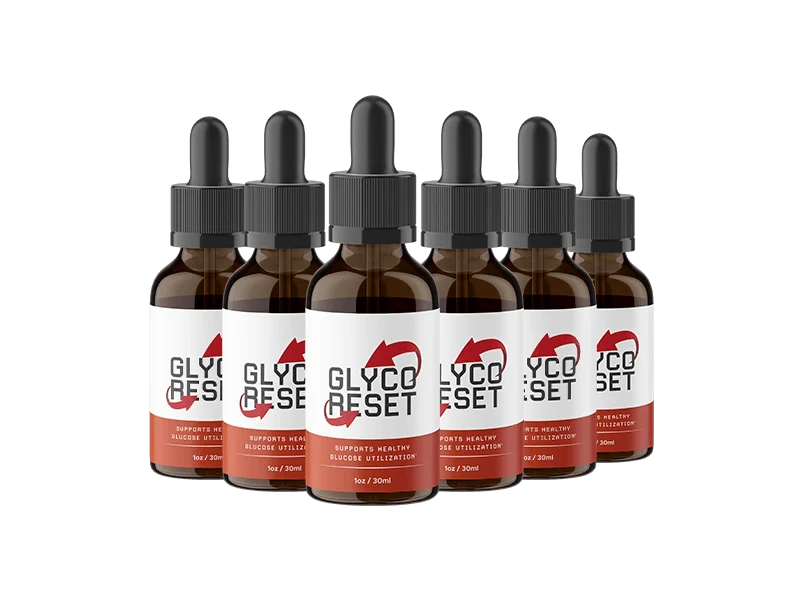
GlycoReset Drops
What's Actually On The Label
GlycoReset is a liquid drop supplement taken sublingually, with a stated dose of two full droppers daily and one bottle sized as a 30-day supply. The active side of the label lists a proprietary blend totaling 121mg made up of gotu kola extract, Chinese hawthorn extract, horse chestnut extract, stone root extract, motherwort extract, butcher's broom extract, and grape seed extract, alongside inactive ingredients including RO water, vegetable glycerin, sodium benzoate, potassium sorbate, malic acid, and sucralose. What the label does not do is break that 121mg figure down ingredient by ingredient — a buyer has no way to know, for example, whether horse chestnut makes up 100mg of that blend or 5mg.
Where The Research Actually Points
Three of the seven botanicals in this blend do have published human research behind them, but it clusters around circulation and vein health rather than glucose metabolism. A 2012 Cochrane review covering 17 randomized trials on horse chestnut extract found it associated with reduced leg pain and edema in chronic venous insufficiency, while noting that more rigorous trials were still needed. A placebo-controlled trial in 166 patients reported that butcher's broom reduced leg volume and swelling compared to placebo. A separate randomized trial found grape seed extract reduced venous reflux time in people with varicose veins. None of that research measured blood glucose, insulin response, or A1C — the outcomes this product's outside marketing associates it with.
The Gap Between Marketing And Ingredients
GlycoReset is promoted in outside marketing for blood sugar support, and in some placements for weight and waistline changes. Reading the actual ingredient panel against that positioning, the two don't line up cleanly: a blend of circulatory herbs is not the formulation pattern typically used for glucose-support products, which more commonly lean on ingredients like berberine, chromium, or cinnamon extract. We're not asserting the product does or doesn't affect blood sugar — we don't have data either way — we're pointing out that the ingredient list and the outside marketing claim appear to describe two different use cases, and a buyer deserves to see that mismatch plainly rather than have it smoothed over.
A Category-Wide Deepfake Pattern
Separately from anything specific to this label, the broader supplement category GlycoReset sits in has a documented problem: AI-generated video ads that impersonate real physicians to promote products those physicians never endorsed. One documented case involved conference footage of a real UK-based doctor being digitally altered to make it appear he was recommending a supplement he had no connection to. We have not traced a specific deepfake clip to the GlycoReset brand name itself, but the tactic is established and active in exactly this space, and it's a reason to treat any doctor-endorsement video for this category of product with real skepticism regardless of which specific product name appears in it.
Manufacturer Transparency
We were unable to independently confirm a street address, FDA facility registration, or GMP certification for the distributor listed on the packaging, GlycoReset Research. The product is described as U.S.-made, but that claim is not independently verified in anything we reviewed. None of this proves the product is unsafe; it does mean the ordinary transparency checks a buyer might expect from a supplement manufacturer come up empty here.
Because the individual amounts inside GlycoReset's proprietary blend aren't disclosed, we're not linking to GlycoReset itself here. If it's circulatory support specifically that interests you — the actual use case the published research on these botanicals supports — a single, individually-dosed ingredient from an established manufacturer lets you see exactly what you're taking. NOW Foods' Horse Chestnut 300mg with added rutin is one such option: a single named ingredient at a disclosed 300mg dose, rather than an undisclosed share of a 121mg blend.
Check NOW Foods Horse Chestnut on Amazon →This opens a live Amazon search, not one listing we hand-pick or control — price and seller can change after we publish. As an Amazon Associate, The Cognitive Report earns from qualifying purchases.
This page reflects our own reading of the publicly sold label and publicly available research and was not sponsored or reviewed by GlycoReset Research. These statements have not been evaluated by the FDA. This product is not intended to diagnose, treat, cure, or prevent any disease, and nothing on this page should be read as medical advice for managing blood sugar or any other condition.