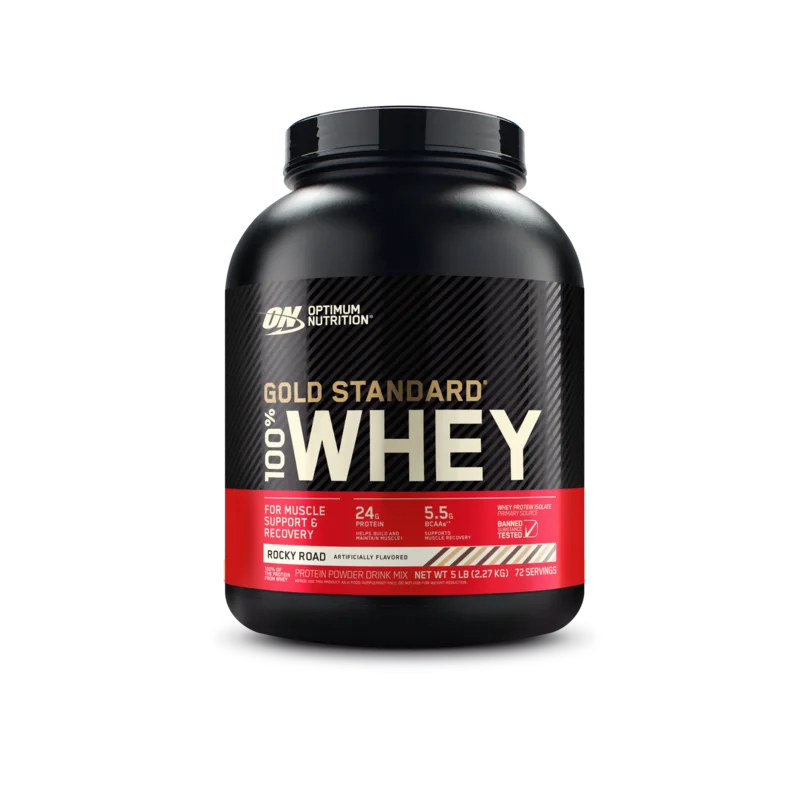
Optimum Nutrition Gold Standard 100% Whey
This is the category's long-running benchmark, and the paperwork backs that reputation up rather than just repeating it. A scoop delivers 24 grams of protein along with 5.5 grams of BCAAs that occur naturally in the whey itself, and two separate outside evaluators have put numbers on the label's honesty: Informed Choice screens the product for more than 250 banned substances, and Labdoor's independent lab analysis scored it A-minus for label accuracy and purity. That's a meaningfully stronger evidence trail than most of what sits on the same shelf.
Who actually makes it
Optimum Nutrition has been owned by Glanbia plc since 2008, and Glanbia runs its own cGMP-certified manufacturing sites in Aurora, Illinois; Walterboro, South Carolina; and Sunrise, Florida. In a supplement market where plenty of brands are just labels slapped on a contract manufacturer's generic formula, owning the production line end-to-end is itself a point in the product's favor.
What's actually in the tub
The ingredient list isn't spotless: acesulfame potassium, an artificial sweetener, shows up on the label, which matters to anyone deliberately avoiding artificial sweeteners regardless of how the rest of the formula tests. And because the protein source is milk-derived whey, people with lactose intolerance may notice gas or general GI discomfort after using it — a known, unremarkable trade-off of whey protein as a category rather than something specific to this brand.
Who should check with a doctor first
Anyone with existing kidney disease should talk to a physician before increasing protein intake, since higher protein loads change how the kidneys have to work. The same goes for anyone with a milk allergy or significant lactose intolerance — a doctor's input before adding this to a daily routine is the safer move in both cases.
Our grade
Grade A. The protein and BCAA numbers are backed by two independent testing programs rather than resting on the manufacturer's word alone, and the company controls its own manufacturing rather than outsourcing it to an unnamed third party. The artificial sweetener and dairy-based formula are worth knowing about, but they're disclosed on the label, not hidden — which is exactly the kind of transparency this desk grades up rather than down.
Of the whey proteins we've checked so far, this is the one with the most independently verifiable testing behind it rather than unverified marketing claims. As with any pick on this site, we link to authorized retailers and may earn a commission at no extra cost to you; prices and sellers can vary by listing.
Check Current Listing →